Project facts

Project Acronym
WindSCORE

Call Module
TRI2 – CM2024-03B Advanced renewable energy (RE) technologies for power production

Grant
1.5 million €

Consortium
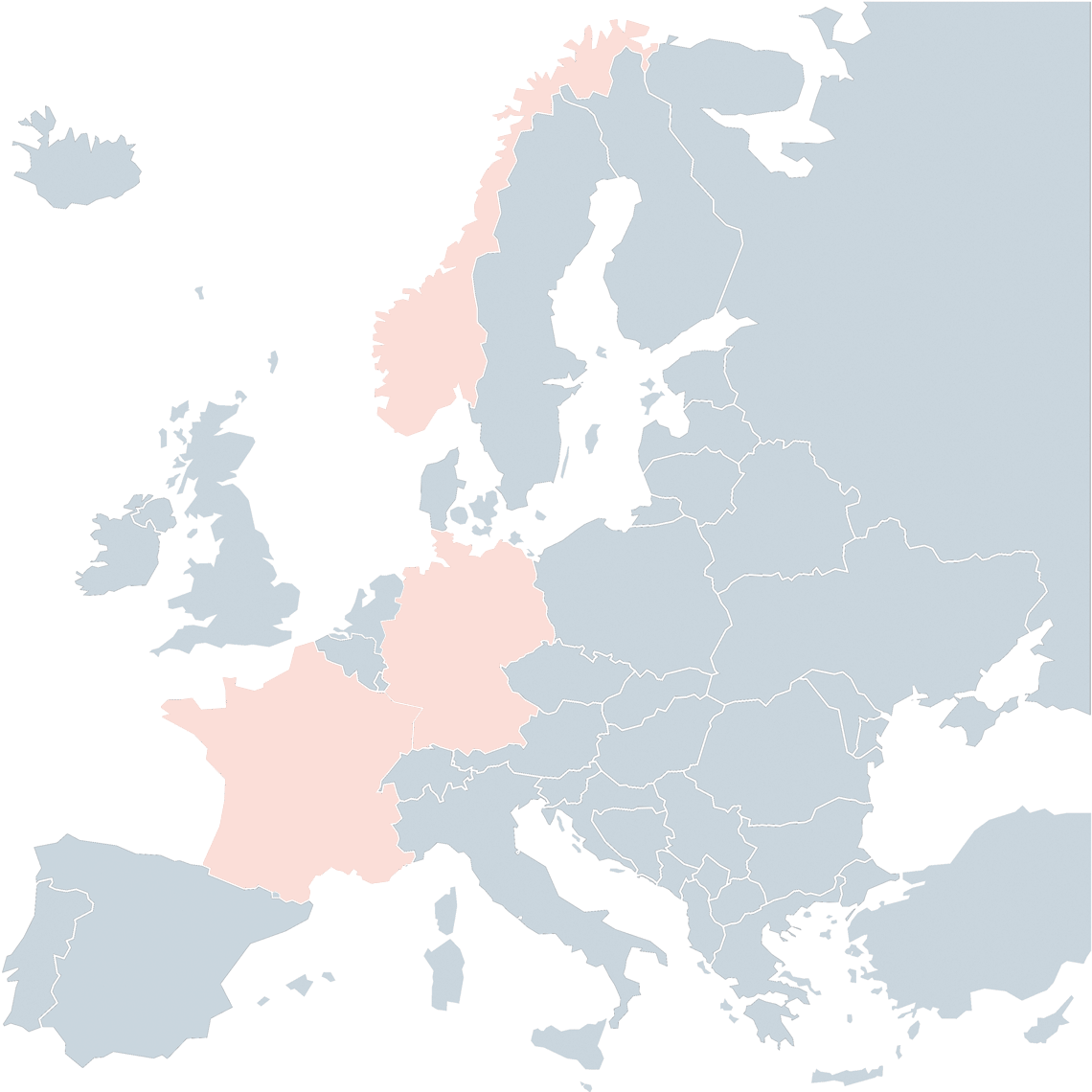
7 partners from 3 countries (France, Germany, and Norway)

Project Duration
36 months (12.2025-11.2028)

Coordinator
Fraunhofer IWES

This research was funded by CETPartnership, the Clean Energy Transition Partnership under the 2024 joint call for research proposals, co funded by the European Commission (GA No. 101 069750) and with the funding organizations as detailed on https://cetpartnership.eu/calls/joint-call-2024/fundig-organisations

Project

WindSCORE’s innovative 360° evaluation system lays the foundation for the further expansion of offshore wind energy and a climate-friendly electricity supply. It provides a reliable basis for assessing the risks and opportunities of future projects and locations – with a particular focus on environmental impact and sustainability.

Objectives

Main Objective: to develop a scientific based 360° evaluation framework including a toolbox for offshore wind farm projects. The concept will be based in value-adding and sustainability-oriented criteria in the form of metrics and guidelines with the goal of promoting social acceptance of offshore wind and supporting the stakeholders in making evidence-based decisions across the full value chain.

SO1: To give an increased value to offshore wind energy systems, through de-risking.

SO2: To provide stakeholders with an 360° evaluation framework and dedicated tool for sustainable decision making.

SO3: To promote development of offshore wind in areas such as the Atlantic Ocean.

SO4: To increase public acceptance and promote the European supply chain.

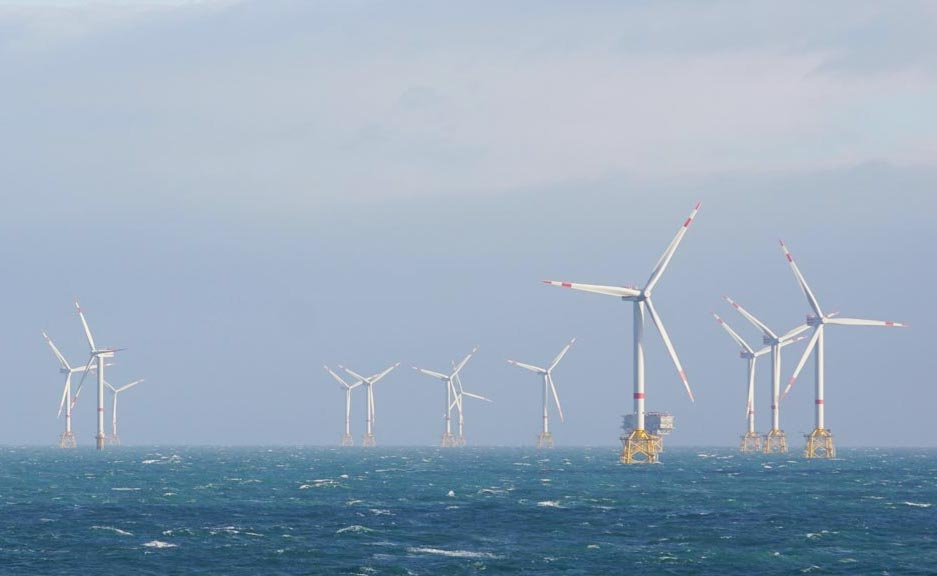
©Fraunhofer IWES/Gerrit Wolken-Möhlmann

Consortium

Fondation OPEN-C
44300 Nantes, France


SINTEF Anergi AS
7034 Trondheim, Norway
+4745456000


TÜV SÜD Energietechnik GmbH
Baden-Württemberg

70794 Filderstadt, Germany

+49 8957910
info@tuvsud.com


Statnett SF

0484 Oslo, Norway

firmapost@statnett.no
23 90 30 00


Equinor ASA

4035 Stavanger, Norway

+47 51990000


Bio-Littoral

44800 Saint-Herblain, France

+33 954985083
contact@bio-littoral.fr

Fraunhofer Institute for Wind Energy Systems -
Fraunhofer IWES
(Coordinator)
Am Seedeich 45
27572 Bremerhaven
 +49 471 14290-100
info@iwes.fraunhofer.de

Copyright©Fraunhofer IWES [created with mapchart.net]

The Fraunhofer Institute for Wind Energy Systems IWES conducts application-oriented research for a sustainable future. The focus topics of the Fraunhofer IWES are offshore, hydrogen, test infrastructure and digitalization. The research work in these future-oriented key technologies plays a central role in the innovation process and strengthens the business location for the benefit of our society by transferring the research results to industry. More than 400 employees at nine locations are developing innovative methods to accelerate the expansion of the wind energy and hydrogen economy, minimize risks, and increase cost efficiency. The Offshore Operations and Logistics group participating in WindSCORE, has a special focus in simulating offshore processes, risk analyses, cost models, and studies.
Fondation OPEN-C is a non-profit public-interest organisation which contributes to a more rapid energy transition and to enhancing France’s position on these strategic issues. As a research infrastructure, it coordinates, develops and manages offshore tests. OPEN-C’s overarching contribution to WindSCORE is focused on its unique offshore wind trial experience, providing a specific viewpoint from higher Technology Readiness Levels. OPEN-C leverages over a decade of experience in facility access to de-risk pilot delivery, including a wide range of activities related to environmental and social impact assessment, notably operating the Offshore Renewable Energy Observatory in France, cross-cutting expertise and engagement with the industry, decision makers and the general public. OPEN-C’s main motivation is to support the MRE sector towards sustainability and environmental impact reduction, through knowledge-based approaches.
SINTEF Energi AS (SINTEF Energy Research) is an independent, not-for-profit research organization for applied research, innovation and technology development, developing sustainable energy solutions. The organization is a part of the SINTEF Group, one of the largest research institutes in Europe, consisting of more than 2200 employees that contribute to value creation and increased competitiveness within the public and private sectors, in Norway and internationally. SINTEF collaborates with leading universities, companies, institutes, industry clusters, start-ups and authorities, and develops projects that generate technology for a better society. The competences relevant to the project of the Energy Systems department at SINTEF range from wind farm control, through grid integration and socio-economic analysis of power system development, to power system and power market analysis on a pan-European scale.
TÜV SÜD is a global testing, inspection and certification company that specialises in promoting sustainability and offers verification/validation and certification to help organisations measure and reduce their environmental impact. TÜV SÜD also offers consulting services to help companies develop and implement sustainable practices. In addition, TÜV SÜD performs audits and inspections to ensure compliance with sustainability standards and regulations.
Statnett is the system operator for the Norwegian electricity grid, responsible for ensuring a reliable and secure supply of electricity throughout Norway. The company plays a critical role in the management and development of the national transmission network, which connects various power producers, including renewable energy sources such as hydropower and wind energy, to consumers. Statnett is also involved in regional and international interconnections, facilitating electricity exchange with neighbouring countries. Committed to sustainability and innovation, Statnett focuses on integrating renewable energy into the grid while promoting a transition towards a low-carbon energy system.

Equinor is Europe’s most important gas supplier, a global leader in the operation of offshore wind farms and a pioneer when it comes to the energy solutions of tomorrow, which also include CO2 management and hydrogen. Its wind farms already supply over a million households in the UK and Germany. In addition to the gas business, Equinor is increasingly involved in offshore wind power, hydrogen and CO2 management.

Bio-Littoral is a small company originating from the academic world. Created in 2004, Bio-Littoral carries out environmental monitoring of the marine environment (fauna, flora and habitat) in the Bay of Biscay and the English Channel for the Water Framework Directive and Natura 2000 for 18 years. We are mainly working for the French State, but our team of 2 doctors and 4 masters involved in the protection of the marine environment, helps also companies such as ports, marine sand extractors and more recently offshore wind farms to limit their impact. Our permanent team is composed of two PhD in marine ecology (AL Barillé 1996 and R Lécuyer, 2024), three master’s in marine environment management (all expert in marine taxonomy) and 1 geographer specialized in satellite image processing. Four of us are professional divers. Our motivation in this project is to test new tools to investigate the marine ecosystem and to understand the impact of wind structure on the environment.

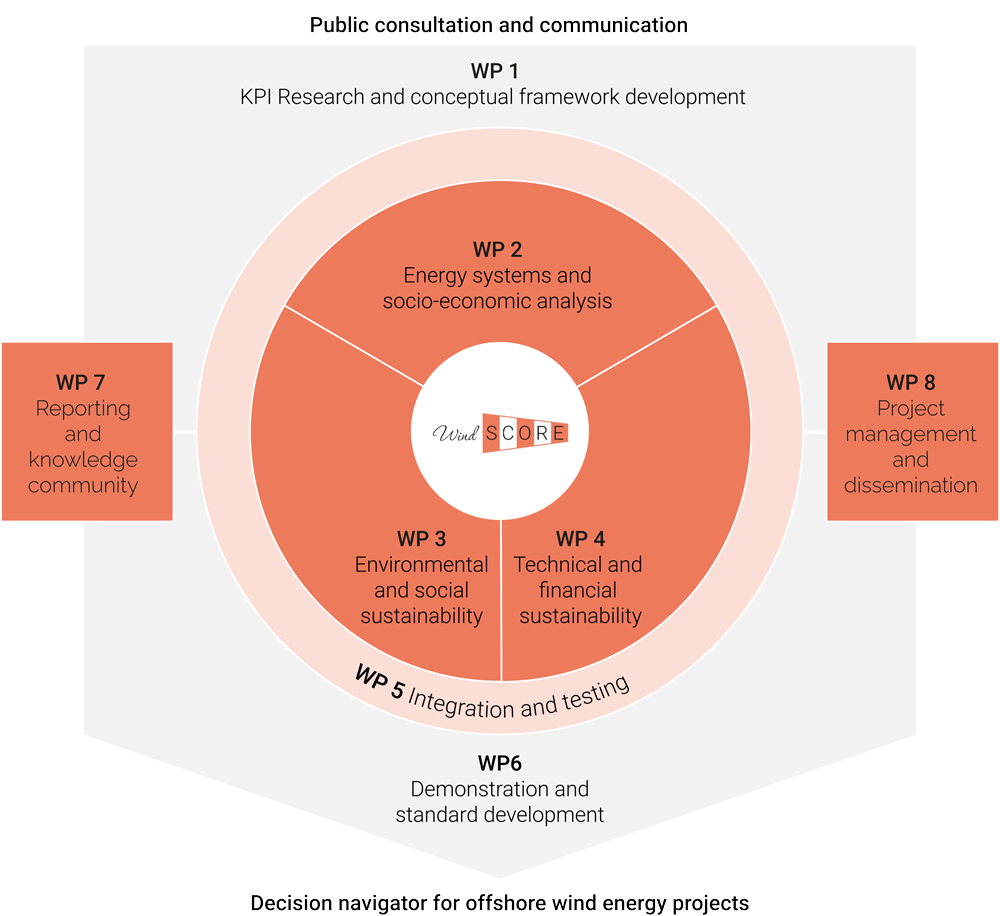
Work Plan

Copyright©Fraunhofer IWES

WP1 – KPI Research and Conceptual Framework Development (lead by Fraunhofer IWES)

Define framework and boundary conditions by integrating holistic sustainability principles, including lessons learned. Define roadmap with pathways of the offshore wind development.

WP2 – Energy Systems and Socio-Economic Analysis (lead by SINTEF)

Quantify potential socio-economic costs and benefits of integrating offshore wind energy into the energy system.

WP3 – Environmental and Social Sustainability (lead by Bio-Littoral)

Develop indicators that assess the impacts of offshore wind farms on different marine environments.

Assess social sustainability of Offshore wind projects with regards to the value chain and its social impact in terms of local content.

WP4 – Technical and Financial Sustainability (lead by Fraunhofer IWES)

Develop a comprehensive set of criteria encompassing technical and financial aspects of offshore wind projects.

Ensure the selection of tenders is based on objective and transparent criteria.

Incorporate UN Sustainable Development Goals (SDGs) and circular economy principles into the evaluation process.

WP5 – Integration and Testing (lead by Fraunhofer IWES)

Integrate selected metrics into a comprehensive 360° evaluation framework.

Test the integrated framework across various EU offshore wind farm scenarios.

Collect and analyse feedback to refine the framework and toolbox.

WP6 – Demonstration and Standard Development (lead by TÜV SÜD)

Validate the KPIs and metrics developed in previous work packages

Consolidate the findings in a comprehensive standard.

WP7 – Reporting and Knowledge Community (lead by Fraunhofer IWES)

Periodic reporting on the project and Participation in working groups

Contribution to the knowledge community in the framework of CETPartnership.

WP8 – Management and Dissemination (lead by Fraunhofer IWES)

Coordinate the scientific work of the partners, monitor progress, check potential risks, and eventually implement mitigation actions, safeguard the quality of deliverables and reports.

Develop a comprehensive communication, dissemination, and exploitation strategy.